EN
 English
 русский
 Español
 عربى
Nobody wants to replace a bed sheet set after three washes because the fitted sheet has pulled away from the mattress. Yet that is what happens when the focus stays on a high thread count and a low price. What actually matters is the fiber, the weave, the depth of the fitted pocket, and the way the fabric is finished. These factors decide how the sheets feel tonight and how they hold up over years of use. The advice below comes from the production floor of a factory that has made bed sheet sets for international hotel, retail, and private-label customers since 1997. If you work in procurement, the same logic applies to a bulk order: tested fabrics, verified dimensions, and reliable finishing matter more than a persuasive product description.
Start with the Fiber: Fabric Decides How It Feels
The fiber is the single best predictor of overall comfort. If a sheet set is made from a fiber that does not breathe or retain moisture well, no weaving trick can save it. The practical approach is to choose a fiber according to how you sleep.
Organic bamboo bed sheets have become a first choice for many families because the fiber is naturally breathable, moisture-wicking, and lower in allergy potential. The best versions are made from organically grown bamboo and finished with a soft sateen weave. If you tend to wake up warm, an organic bamboo bed sheet set is a reasonable upgrade from synthetic blends.
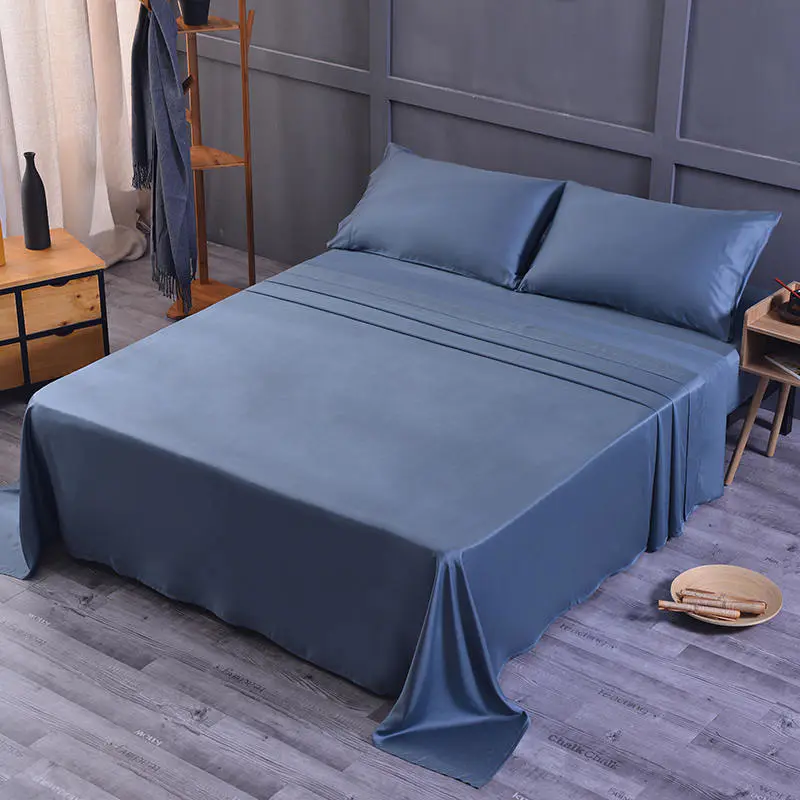 Custom Organic Bamboo Bed Sheet Set Suppliers, ManufacturersNantong Xinsheng Textile Garment Co.,Ltd. is China Organic Bamboo Bed Sheet Set manufacturers and Organic Bamboo Bed Sheet Set suppliers,...View Product →
Pure cotton remains the benchmark for all-round comfort. A 100% combed cotton sheet set with a percale weave is crisp and cool in summer, while a cotton sateen weave gives a smoother, more lustrous surface. Cotton also becomes softer with washing, which is why many hotel procurement teams keep it as their standard. A pure cotton bed sheet set works well for most households.
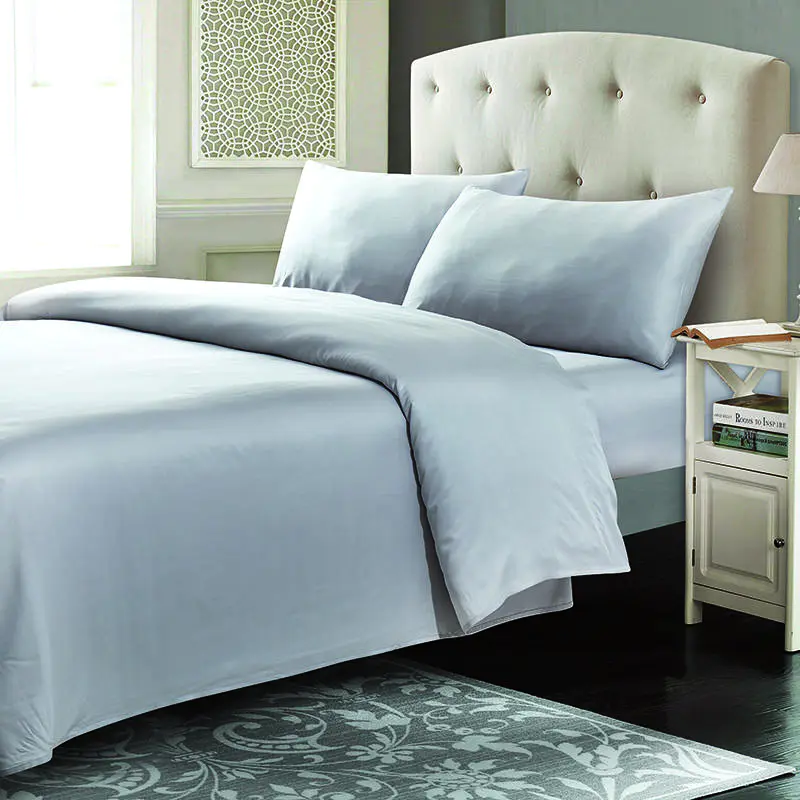 Custom Pure Cotton Bed Sheet Set Suppliers, ManufacturersNantong Xinsheng Textile Garment Co.,Ltd. is China Pure Cotton Bed Sheet Set manufacturers and Pure Cotton Bed Sheet Set suppliers, we cu...View Product →
Tencel is another fiber worth serious consideration. Made from wood pulp in a closed-loop process, Tencel fibers are extremely smooth and handle moisture better than cotton. The result is a silky sheet set that feels cool against the skin and wrinkles less than many comparable fabrics. For a balance between luxury and practicality, a Tencel bed sheet set delivers a similar feel to silk at a lower price.
 Custom Tencel Bed Sheet Set Suppliers, ManufacturersNantong Xinsheng Textile Garment Co.,Ltd. is China Tencel Bed Sheet Set manufacturers and Tencel Bed Sheet Set suppliers, we custom Tence...View Product →
Microfiber, usually polyester, is the budget option; it is soft and wrinkle-resistant but less breathable. Linen offers a textured, breathable fabric that gets softer over time but wrinkles easily. Mulberry silk is the premium choice for its temperature regulation and smoothness, though it needs gentler care. A good sheet set should also be judged by the finish. Some fabrics are treated with softeners that wash out quickly, leaving a rougher surface after a few cycles. The best test is to rub the fabric between your fingers and read the care label; a simple, clean finish often outlasts a heavily coated one.
| Fiber | Feel | Best for | Main care point |
|---|---|---|---|
| Organic bamboo | Smooth, cool | Hot sleepers, sensitive skin | Machine wash on gentle cycle |
| Pure cotton | Crisp to silky | Everyday use, all seasons | Wash cool, tumble dry low |
| Tencel | Silky, smooth | Warm sleepers, luxury feel | Avoid bleach, dry flat |
| Microfiber | Soft, brushed | Budget use, easy care | Wash warm, low heat |
| Linen | Textured, breathable | Hot summers | Hand wash or gentle cycle |
| Mulberry silk | Luxurious, smooth | Premium sleep, special occasions | Dry clean or hand wash |
Blends can combine benefits, such as cotton with a small percentage of polyester for easier ironing, or bamboo with spandex for a stretchy fitted sheet. If you prefer a natural feel, look for a high natural-fiber percentage and confirm the exact blend before buying.
Thread Count: A Useful Number, Not a Magic Number
A thread count of 300 to 500 is enough for a high-quality bed sheet set. Numbers above 800 are often advertised loudly, but they can be produced by twisting two or more yarns together and counting them as one. That does not make the fabric softer, and it can reduce breathability. When evaluating a sheet set, pay attention to the fiber quality and the weave rather than the label. For cotton, long-staple fiber varieties such as Egyptian or Pima cotton matter more than the count itself. Consumers are also misled by "Egyptian cotton" claims. Real Egyptian cotton is long-staple and durable, but the term is often applied loosely to fabrics with a small fraction of Egyptian cotton or none at all. Check the label for the percentage and ask for documentation if you are buying at scale.
- Use a fabric that is combed or long-staple for reduced pilling.
- Choose a lower thread count if you want a crisp percale; choose a slightly higher one for smooth sateen.
- Ask for the finished weight of the fabric if you are buying wholesale; heavier sateen can feel more substantial without being hot.
Fit and Sizing: Measure Your Mattress Before You Order
Measure the mattress, not the label. A fitted sheet needs to cover the mattress top plus the full depth of the mattress. Most standard bed sheet sets with a pocket depth of 30 to 35 centimeters will fit a 25-centimeter mattress, but tall pillow-top mattresses require a pocket depth of 40 centimeters or more. If the elastic is not continuous around the entire fitted sheet, the corners are more likely to slip.
Size names also vary by market. For reference, US mattress sizes are: Twin 38 by 74 inches, Twin XL 38 by 80, Full 54 by 75, Queen 60 by 80, King 76 by 80, and California King 72 by 84. Deep-pocket fitted sheets are usually labeled 15 to 18 inches, or 38 to 46 centimeters. If you are ordering from an overseas manufacturer, confirm the exact dimensions and include a mattress depth range in your spec. This avoids the single most common reason for returned bed sheet sets.
Weave and Finish: Crisp Percale, Silky Sateen, or Softly Brushed
Percale and sateen are the two dominant weaves for cotton and cotton-blend sheets. Percale is a plain weave, one yarn over one yarn, giving a matte finish, crisp hand feel, and excellent breathability. Sateen is a three-over-one weave that produces more yarns on the surface, creating a smoother, silkier fabric with a subtle luster. Brushed finishes, common on microfiber sheets, raise a soft nap on the surface for warmth in winter. Choose percale if you sleep warm and like a fresh, hotel-style crispness. Choose sateen if you prefer a closer, softer drape. Choose brushed fabric for cold bedrooms and winter months.
Beyond percale and sateen, you will also find jacquard weaves, which create raised patterns in the fabric, and flannel finishes that are brushed on both sides for extra warmth. Jacquard sheets are decorative and usually heavier; flannel is a seasonal choice for winter. Both are valid, but they answer different sleep needs.
Care and Buying Considerations: What to Ask Before You Commit
The lifespan of a bed sheet set depends more on care than on the initial quality. Colder water, gentle detergent, and low-heat drying preserve fibers and prevent shrinkage. High heat is the fastest way to ruin elastic in a fitted sheet. For household use, the easiest habit is to wash a new bed sheet set before first use to remove loose dye and soften the fabric. Separate dark and light colors for at least the first few washes, especially with deep-printed patterns. This prevents dye transfer and keeps the set looking fresh.
For commercial buyers, consistency matters: ask the factory about shrinkage percentage, colorfastness ratings, and seam construction before placing a large order.
- What is the shrinkage tolerance after the first wash?
- What fiber composition and yarn count are used?
- Can you supply test reports for colorfastness and formaldehyde content?
- What is the minimum order quantity and production lead time?
For projects that need custom sizes, labels, or packaging, OEM and ODM manufacturing services can help turn a concept into a production-ready sheet set.
Choosing a bed sheet set is not about chasing the highest number or the deepest discount. Start with the fiber that matches your sleep style, choose a weave that gives the feel you want, measure your mattress before selecting the pocket depth, and follow the care label once it is on the bed. If you are buying in quantity, verify the fabric specs and ask for samples. For a quick comparison, you can browse the full bed sheet set collection and see which fabric makes sense for your next purchase.