EN
 English
 русский
 Español
 عربى
Imagine a container of duvet covers that looked perfect in the lab sample but shows uneven stitching and a strong chemical smell after the first production wash. This is the risk you face when you choose a duvet cover manufacturer based only on price or a photo gallery. The safer approach is to evaluate manufacturers against a small set of production criteria before you commit. The best duvet cover manufacturers combine consistent fabric quality, controlled stitching, and straightforward custom-order support. Everything else is easier to manage once those three basics are in place.
What Actually Matters When Choosing a Duvet Cover Manufacturer
A duvet cover is a simple product in theory, but manufacturing it at scale requires control at every step. Before you send an inquiry, check these areas:
- Fiber sourcing and fabric finishing: Can the manufacturer name the fiber origin, yarn count, and finishing process?
- Production capacity and equipment: Look for weaving, cutting, sewing, and embroidery capabilities under one roof.
- Sampling and approval workflow: Clear sample stages reduce the chance of miscommunication.
- Quality checks and defect tolerance: Know their acceptable defects per hundred pieces and their inspection process.
- OEM/ODM capability and documentation: Can they handle custom colors, labels, and packaging?
- Delivery logistics and export experience: Ask about port proximity, packing standards, and shipping terms.
Some manufacturers present themselves as duvet cover factories but actually act as trading companies. Confirmation is simple: ask for certificate numbers, plant photos, and details of their equipment. The more transparent they are, the fewer surprises you will get later.
Fabric Quality Starts With Fiber and Construction
If you compare duvet cover manufacturers, start with their fabric program. The fiber determines how the cover feels, how it survives washing, and whether it suits warm sleepers, allergy-prone users, or hotel settings. In our production experience, the following materials cover most buying scenarios.
| Fabric | Key Properties | Common Duvet Use | Care Consideration |
|---|---|---|---|
| Egyptian cotton | Long-staple fibers, smooth and crisp hand-feel | Premium residential and hotel bedding | Needs ironing for a polished finish |
| Organic bamboo | Breathable, soft, hypoallergenic | Summer bedding and sensitive-skin lines | Gentle machine wash, low heat dry |
| Tencel / Lyocell | Moisture-wicking, smooth, eco-friendly | All-season bedding in mid-to-premium ranges | Low shrinkage, avoid high-temperature drying |
| Stonewashed linen | Textured, breathable, naturally wrinkle-resistant | Casual and natural-style interior programs | Durable but softens with repeated laundering |
| Microfiber | Wrinkle-resistant, affordable, easy care | Budget-friendly and mass hotel programs | Quick drying, good color retention |
A reliable manufacturer should state the exact fiber composition, yarn count, and finishing process for each line. Avoid vague labels such as “premium cotton” or “soft blend” without numbers.
Egyptian Cotton: The Hotel Standard
If your market expects crisp, breathable bedding, Egyptian cotton duvet covers are a dependable choice. Long-staple fibers produce a tighter weave and a more stable surface that withstands repeated hotel washing. Ask the manufacturer for the thread count and whether they use combed yarn. A higher thread count alone is not enough; the finishing and stitching matter equally.
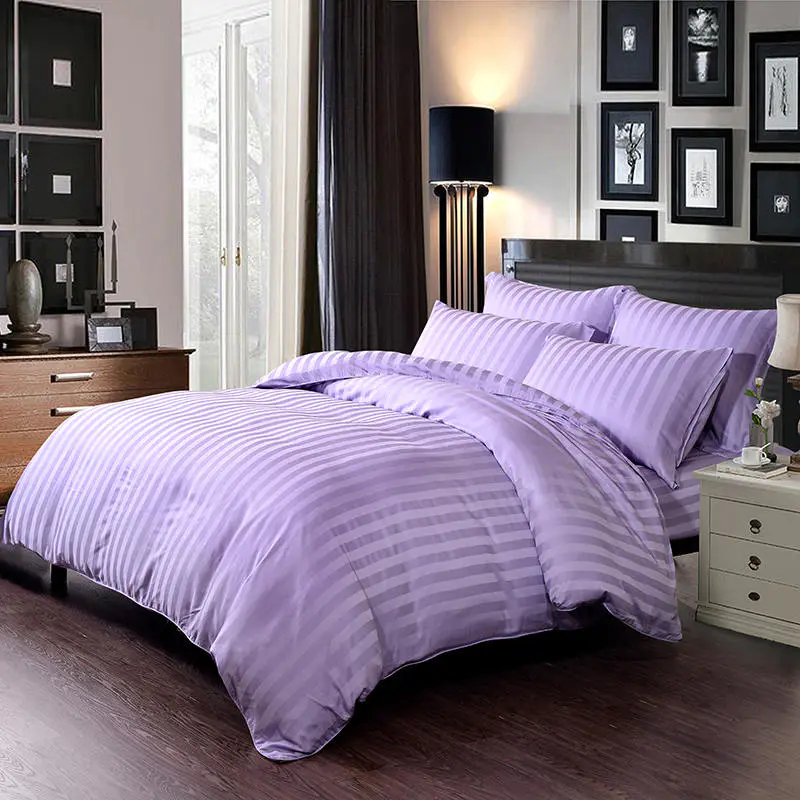
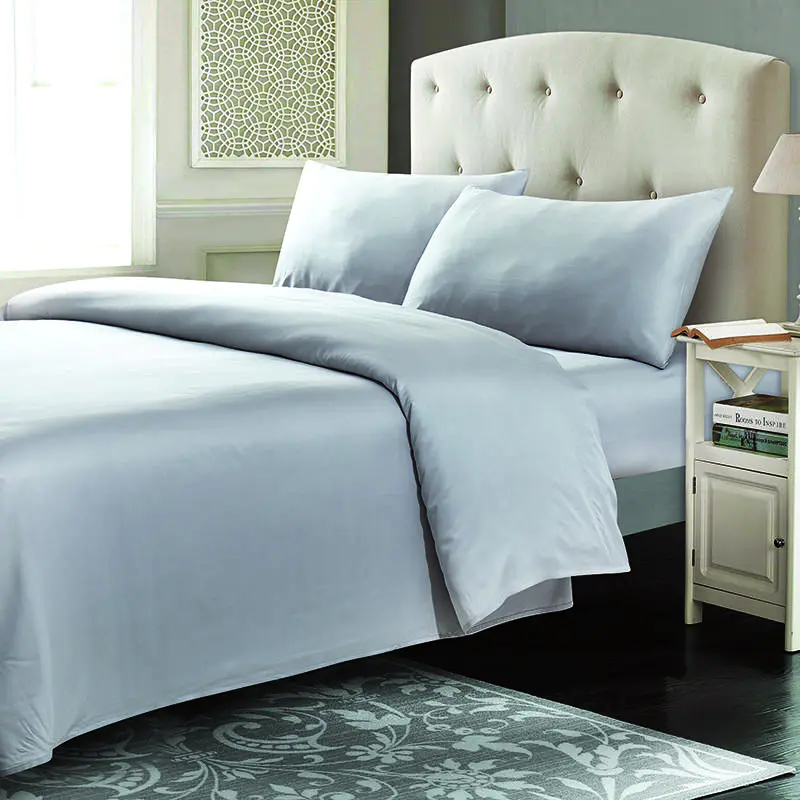
 High Thread Count Pure Egyptian Cotton Duvet Cover for TwoA duvet cover woven from long-staple Egyptian cotton with an extra-fine weave for a smooth, breathable feel. Its generous sizing suits shared beds, and the durable construction fits hospitality or premium home use.View Product →
Organic Bamboo: Breathability and Hypoallergenic Appeal
Bamboo viscose is a strong choice for summer programs or consumers with sensitive skin. It feels smooth, absorbs moisture well, and drapes nicely. The eco-friendly angle is a clear selling point, but only if the manufacturer can document the fiber conversion process. Confirm the blend percentage and finish before you finalize the order.
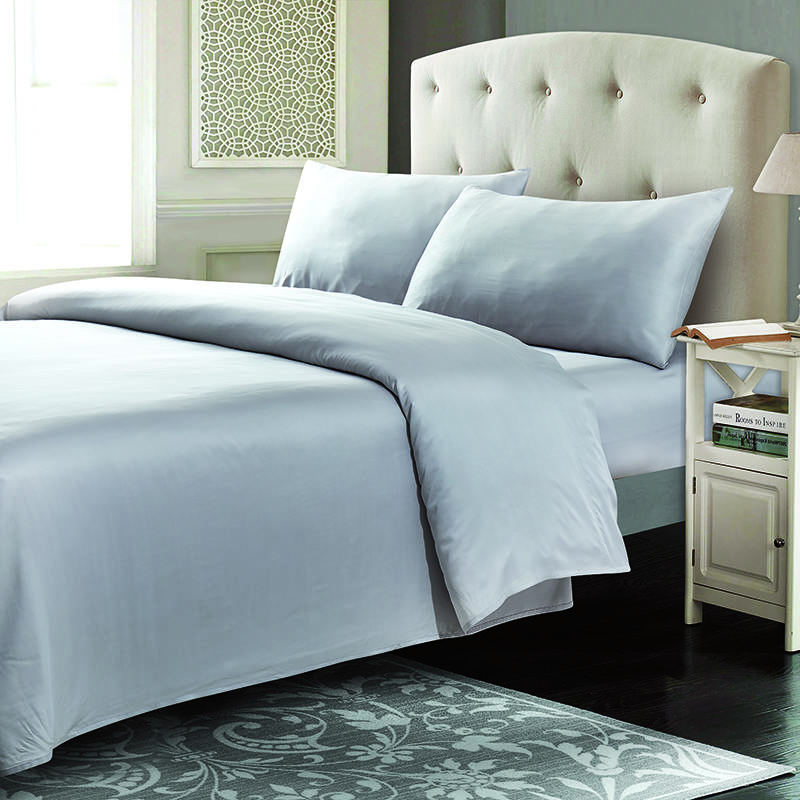
 Natural Fiber Hypoallergenic Bamboo Quilt CoverMade from organic bamboo fiber with customizable sizes, this quilt cover offers a soft, moisture-wicking surface suitable for sensitive skin. Its natural composition appeals to eco-conscious buyers, but verify the blend and finish before ordering.View Product →
Tencel: Smooth Climate Control for All Seasons
Tencel lyocell is common in middle and premium duvet cover sets because it wicks moisture away and stays cool on warm nights. It resists pilling better than many synthetic blends and shrinks less than ordinary cotton. If you are building an all-season assortment, a Tencel duvet cover set is a practical item to test with your target audience.
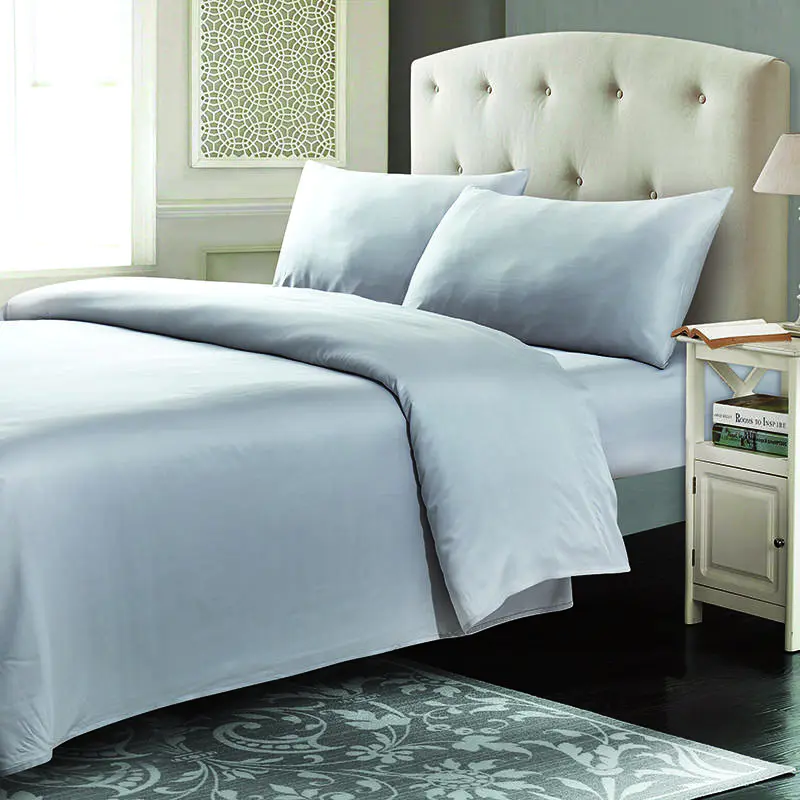
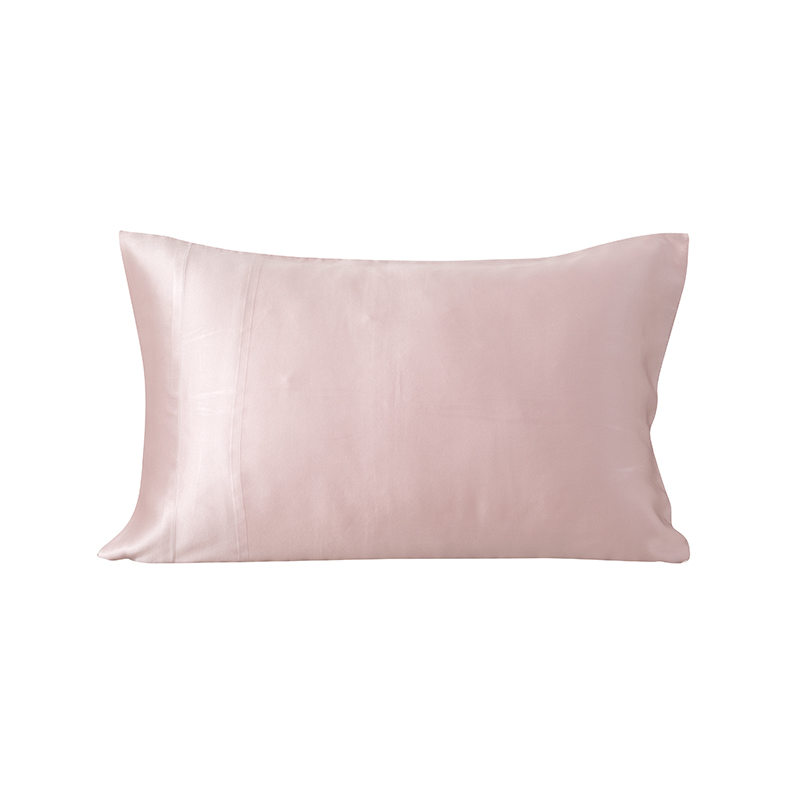 Eco-Friendly All Season Tencel Bedding Duvet CoverA Tencel lyocell duvet cover that promotes airflow and moisture wicking for a cool, dry sleep environment. Its smooth texture and reduced pilling make it a versatile choice for middle to premium bedding programs.View Product →
Customisation and OEM/ODM Support
If you are selling under your own brand, the manufacturer should handle specifications such as size, closure type, piping, embroidery, and packaging. A true OEM/ODM partner will make samples, adjust measurements, and offer custom colors. Nantong Xinsheng Textile Garment Co., Ltd., for example, accepts both OEM and ODM orders and does not impose a minimum order size that makes trial runs impossible. You can review the process on their service page.
Before mass production, request a pre-production sample and set acceptance criteria for seam allowance, thread tension, zipper alignment, and corner construction. The sample is the fastest test of how the manufacturer will behave during the full order.
Quality Control, Certifications and Compliance
Do not settle for verbal promises. Check whether the factory holds management system certifications such as ISO 9001:2015 for quality management and ISO 14001 for environmental management. These certificates show that the company follows documented procedures, although they are not a guarantee of perfect products.
For duvet covers specifically, inspect stitching density, fabric shrinkage limits, and colorfastness. Ask for test reports for standard washing, pilling, and seam slippage. A responsible manufacturer will share this data or arrange third-party testing. Fill distribution also matters when the cover is paired with an insert; our review of down filling uniformity explains why even filling is important for comfort and warmth.
Logistics and Export Experience
Delays in bedding orders often happen after production ends. A manufacturer located close to an export port and with regular export experience can reduce freight and customs problems. Nantong Xinsheng Textile Garment Co., Ltd., is about two hours by road from Shanghai port and exports to the United States, South America, the United Kingdom, Canada, Western and Eastern Europe, and Australia. This kind of track record helps with paperwork, packing requirements, and delivery planning.
Ask about packing standards, carton strength, and lead times. For a container order, confirm the port, shipping terms, and incoterms in writing.
The most reliable way to choose a duvet cover manufacturer is to combine desk research with a sample order. Verify fabric options, production controls, certification documents, and export setup. If a manufacturer can handle a small trial order and still maintain quality, you have found a supplier worth keeping for the long term.