EN
 English
 русский
 Español
 عربى
The best lightweight blanket is not the thinnest blanket in the catalogue. It is the one whose material, weave, and weight match how you sleep and how you plan to use it. When a buyer asks for a lightweight blanket, the real requirement usually falls into one of three groups: a cool summer layer that does not trap heat, a light but structured blanket that still feels substantial, or a versatile layer that can be used alone or under a duvet.
Because we manufacture lightweight blankets for hotels, retailers, and private-label brands, we normally start with a simple set of technical parameters: weight in GSM, fabric composition, weave structure, and care behavior. This article walks through those parameters in plain language and explains what actually changes the way a lightweight blanket feels on the bed.
What Does "Lightweight" Mean in Real Terms?
In textile sourcing, blanket weight is expressed in grams per square meter (GSM). Most lightweight blankets fall between 150 and 300 GSM. Below 150 GSM, a blanket begins to feel more like a sheet. Above 300 GSM, it moves into classic midweight territory and is harder to layer comfortably in warm weather.
For hotels and home textile brands, the useful lightweight range is usually 180 to 280 GSM. Within that range, a change of 20 to 30 GSM can be felt when you compare samples side by side, but it is not a quality difference. It is simply a specification choice. The key is to define the target weight before sampling, then check that the finished product stays inside an agreed tolerance.
Weight alone does not determine warmth. A loosely knitted waffle or thermal blanket can feel light in the hand yet trap air in the open spaces of the fabric. That trapped air provides insulation without adding material. The opposite is also true: a very dense, smooth blanket can be light but not feel warm at all.
Lightweight Blanket Materials, Compared
The fastest way to narrow the choice is to decide which performance quality matters most: softness, breathability, structure, or easy care. Cotton, bamboo, linen, and flannel each solve the lightweight blanket brief differently.
| Material | Typical Weight | Best Known For | Best Use |
|---|---|---|---|
| Egyptian cotton | 150-250 GSM | Smooth hand feel, durability, breathability | Hotels and year-round layering |
| Organic bamboo | 150-240 GSM | Softness, moisture control, natural fiber breathability | Warm sleepers and humid climates |
| Stonewashed linen | 160-280 GSM | Airy texture, casual relaxation, low-allergen | Summer nights and transitional weather |
| Flannel | 180-300 GSM | Brushed warmth without bulk | Cool rooms, as a throw or layering piece |
Egyptian Cotton
Egyptian cotton gives a lightweight blanket a crisp, breathable feel, and it carries heat better than synthetic fabrics. A waffle weave is especially useful because the open cells allow airflow while the yarn itself provides enough body to feel like a proper blanket. That is why a 400-thread-count waffle-weave Egyptian cotton blanket works for both summer sleeping and cool air-conditioned rooms.
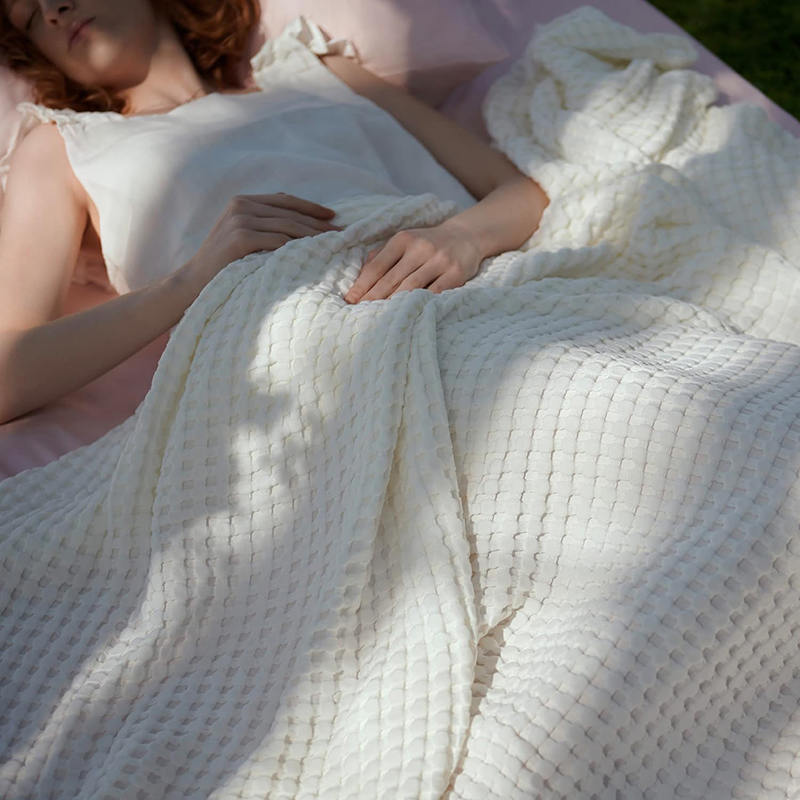 Wholesale 400 Thread Count Waffle Weave Egyptian Cotton Blanket Suppliers, FactoNantong Xinsheng Textile Garment Co.,Ltd is China wholesale 400 Thread Count Waffle Weave Egyptian Cotton Blanket suppliers and factory,T...View Product →
Organic Bamboo
Organic bamboo is lighter and noticeably softer than cotton in the same GSM. It also moves moisture away from the skin, which makes it one of the most comfortable choices for people who run warm at night. If you need a summer layer that does not cling or trap humidity, a breathable natural-fiber bamboo blanket is a strong option. For a deeper look at how bamboo regulates temperature, see our explanation of how bamboo blankets regulate body temperature across seasons.
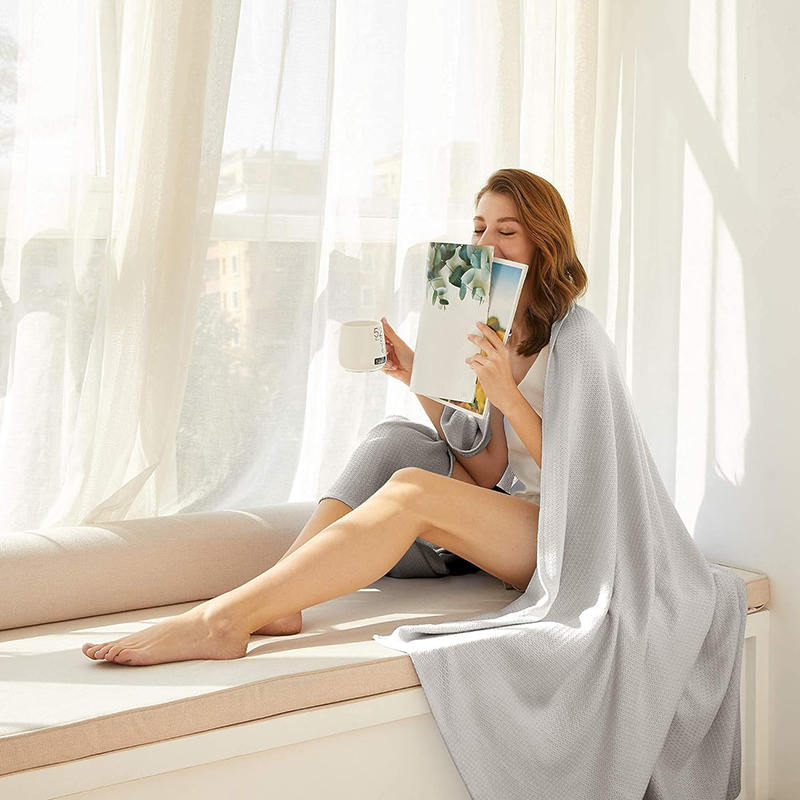 Wholesale Environmentally Friendly And Breathable Natural Fiber Bamboo Blanket SNantong Xinsheng Textile Garment Co.,Ltd is China wholesale Environmentally Friendly And Breathable Natural Fiber Bamboo Blanket supplier...View Product →
Stonewashed Linen
Stonewashed linen has a relaxed, slightly textured hand feel and a naturally low allergen profile. It is breathable, absorbs moisture well, and becomes softer with every wash. The trade-off is that linen wrinkles; for many buyers, that is part of its appeal. For a bed that looks understated and modern, a 100% stonewashed linen lightweight bedding blanket delivers the loose, effortless look without adding heavy layers.
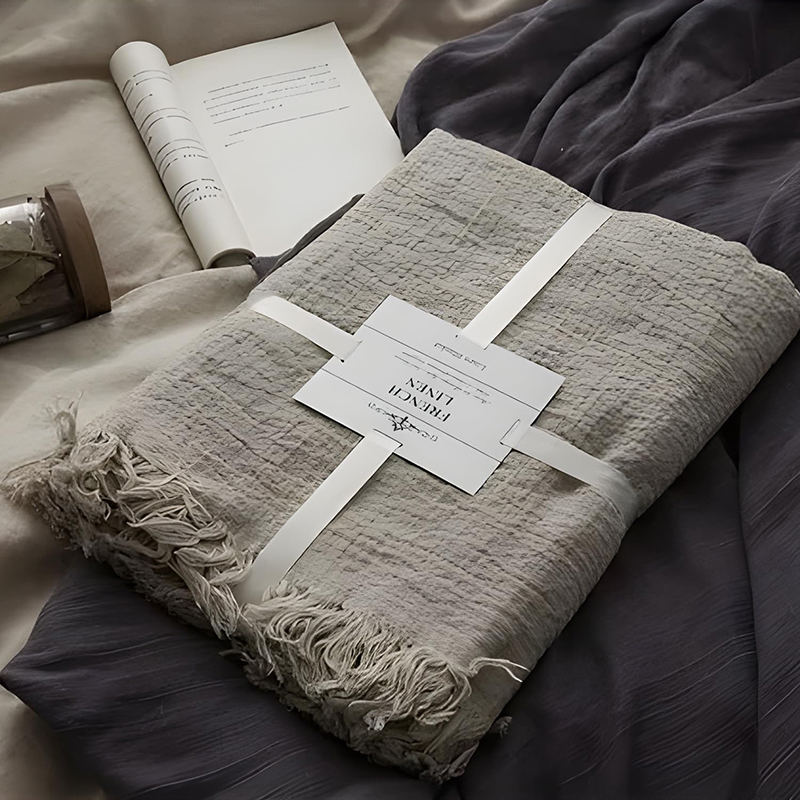 Wholesale pure Stonewashed Linen Lightweight Bedding Blanket Suppliers, Factory Nantong Xinsheng Textile Garment Co.,Ltd is China wholesale pure Stonewashed Linen Lightweight Bedding Blanket suppliers and factory,pure...View Product →
Flannel
Flannel is not usually considered a summer fabric, but a lightweight brushed flannel can be the right answer for cooler bedrooms or for nights when air conditioning makes a thinner blanket feel inadequate. Brushed fibers trap heat on the surface of the fabric, so flannel can provide more warmth per GSM than a smooth woven cotton.
Construction Details That Change the Feel
Material gets you part of the way; construction determines how the blanket behaves on the bed.
- Waffle weave: Light and textured, with pockets of air. It adds warmth without a dense fabric hand feel and is a good middle ground if you want something that is not too lightweight.
- Smooth woven finish: Clean, substantial, and closer to a hotel blanket. It drapes well and resists pilling, but may feel less plush.
- Brushed surface: A brushed cotton or flannel surface increases warmth and softness. It is the easiest way to add coziness without a high GSM.
- Stitched or quilted structure: Adds some rigidity and a decorative look. A quilted lightweight blanket feels more deliberate and works well as a bed cover or top layer.
When you compare samples, look at how the edge is finished and how the fabric drapes over the side of a mattress. A well-made lightweight blanket should hold its shape and not stretch out at the corners after a few washes.
Choosing by Use Case
The easiest way to buy the right lightweight blanket is to match it to a specific room and sleeping habit.
- Summer sleeping: Choose organic bamboo or stonewashed linen in the lower end of the 150-240 GSM range. Both fabrics allow air movement and absorb moisture from the skin.
- Air-conditioned bedrooms: A cotton waffle or lightweight flannel at 180-250 GSM adds enough warmth to avoid waking up cold.
- Layering under a duvet: Use a smooth cotton or bamboo blanket at around 200 GSM. It should feel like a buffer layer, not a second duvet.
- Sofa and lounge use: Softer fabrics with more structure, such as flannel or a slightly heavier linen, stay in place better when you are sitting up.
- Hotel guestrooms: Durable cotton or cotton-blend waffle weaves are easier to launder and less likely to show wear than brushed alternatives.
What to Check Before You Buy or Order
The biggest purchasing risk with lightweight blankets is not choosing a low-quality product; it is choosing the wrong specification. A blanket that feels comfortable in the showroom can feel different after washing, especially if shrinkage is not controlled.
- GSM range: Ask the supplier for the actual finished weight, not the fabric weight before finishing. There can be a gap between the two.
- Shrinkage: For cotton and linen, check the expected shrinkage percentage after the first three washes.
- Pilling: Waffle weaves and brushed surfaces should be tested for fiber shedding and pilling, especially in hotel use.
- Colorfastness: Dyes on lightweight blankets should be stable in cold water and mild detergent.
- Edge finishing: A narrow hem or bound edge should lie flat and not twist.
If you are sourcing for a hotel, resort, or retail brand, these parameters can be written into an order. We offer OEM and ODM production for custom lightweight blanket production, including custom sizing, fabric selection, labels, and packaging.
Care and Maintenance
Lightweight blankets are most likely to fail in the wash. Machine wash in cold or warm water with a gentle cycle, and tumble dry on low. Linen should be line-dried when possible to preserve its texture. Avoid bleach and fabric softeners on bamboo and cotton; both can coat the fibers and reduce breathability. With proper care, a lightweight blanket made from cotton, bamboo, or linen can outlast heavier synthetic products.
The right lightweight blanket should disappear when you sleep and still be noticeable when you touch it. Start with GSM, work through the material, and test how the weave behaves after a few washes. That process will give you a frame for comparing products, whether you are buying one blanket or specifying a full hotel order.